Global street experiments: Short-term actions to long-term changes
What can we learn from global tactical urbanism?
Orthodox planning envisions the city by spatial planning, land-use zoning and infrastructure provision. It operates on a large scale, with big budgets and expansive teams to deliver substantial and permanent infrastructure that signals particular land use. It deploys predictive projects to inform decisions about motorways, industrial zones, shopping centres and housing development. It usually aligns with aspirations such as sustainability, liveability and resilience, to invite broad support.
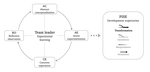
Cities certainly need orthodox planning. But cities nowadays are also facing an era of rapid change, crises and disruptions, and ever-increasing informal and unofficial practices. Orthodox planning has difficulties in addressing these challenges because of the long timeframe (e.g., 20 years), translation issues in statutory and non-statutory regulations, and loss of control in implementation due to the diversity of stakeholders and forces. Against this background, tactical urbanism is emerging as a different school of thought. It uses short-term actions that prototype planning and design ideas of our buildings, streets and neighbourhoods, aiming to inform long-term changes in urban development. It includes distinctive works, ranging from do-it-yourself urbanisms and place activations to those government-endorsed, supported or even initiated projects. However, the application of tactical urbanism was mainly limited to small scales and specific locations.
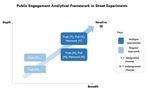
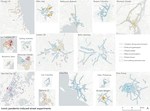
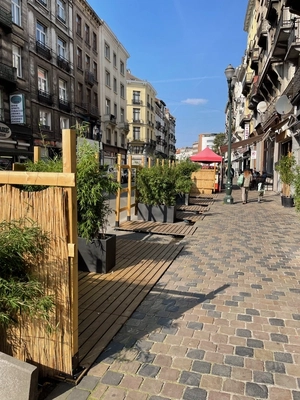
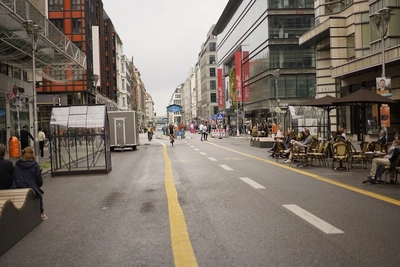
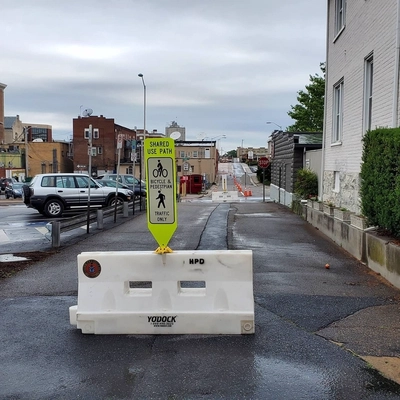
During the COVID-19 pandemic in 2020, cities worldwide took a tactical urbanism approach, temporarily converting car-centric city streets into streets for walking, cycling, outdoor dining and commerce, responding to the demand for safe, physically distanced outdoor activities. On a global scale, these street experiments offer us a window of opportunity to rethink planning and re-envision the future city. What can we learn from the global tactical urbanism phenomena? This project will study the evolutionary logic of street experiments. This research may help academic researchers, architects, urban planners, health professionals, and the public during and after the pandemic.
Project Outputs
This project is funded by HKUrbanLabs (2021.07-2024.07) and the Research Outout Prize (2022.01-2023.01).
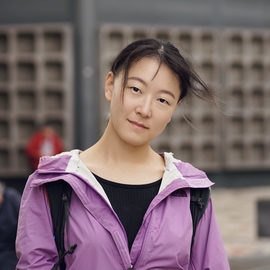
Dr Kristen Zhao
Deputy Director
Dr Zhao is a is an urban researcher and Lecturer in Architecture whose work integrates architectural education, urban research, and spatial analytics. Her research employs mixed-method approaches to examine urban mobility transitions, urban analytics, and design-led experimentation in cities.
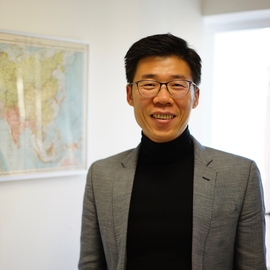
Dr Guibo Sun
Director
Dr Guibo Sun is a Lecturer in Urban Planning at the University of Manchester. His research examines how major urban infrastructure shapes cities and affects social and health outcomes, spanning the intersections of planning, land policy, transportation, urban design, and public health.