How greenway exposure reduces body weight: A natural experiment in China
Abstract
Street experiment is a tactical urbanism practice that involves implementing temporary changes in street use through regulatory or physical interventions, aimed at people-centric street transition. During the Covid-19 pandemic, cities worldwide implemented street experiments to accommodate the need for socially-distanced physical and commercial activities. However, we know little about the locations and urban environments of these pandemic-induced street experiments on a global scale. This knowledge gap hinders us from understanding where these experiments took place, the conditions of the neighbourhoods involved, and the factors contributing to their longevity beyond the pandemic. We thus developed a geospatial database to document the pandemic-induced street experiments (PISE Database), enabling quantitative analysis of these interventions. We mapped the locations and calculated the neighbourhood environment attributes of 539 street experiments in 333 cities. Our contributions are twofold. Firstly, we enhanced the comparability of built environment indicators between cities, thereby advancing the construction of global geospatial datasets. Specifically, we established a standardised template encompassing unified neighbourhood-level built environment indicators and methodologies, for which we devised relative values to facilitate comparisons between different cities and defined study areas using the 15-minute walking city and Urban Centre concepts. Secondly, we conducted primary analyses based on spatial and temporal visualisations of the street experiment locations and durations, shedding light on locational patterns and development trajectories during times of crisis. This global, quantitative approach complements the growing body of local and often qualitative studies. Our work improves existing global quantitative databases and provides a robust foundation for future research on tactical urbanism.
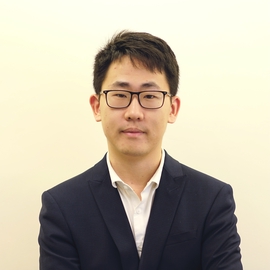
Dr Dongsheng He
Research Fellow
Dr Dongsheng He advances sustainable urbanisation through integrated transportation and land use planning. His research explores strategies to promote active travel and implement transit-oriented development (TOD) as pathways to creating more liveable, low-carbon cities. His work has examined the mechanisms of land value capture in relation to TOD, identifying how municipalities can leverage this approach to finance expanded transit infrastructure while supporting broader sustainable development goals.