Gendered impacts of public transport on social isolation and loneliness among older adults: Evidence from a natural experiment in Hong Kong
Abstract
A well-designed public transport system has the potential to support social participation and alleviate social isolation and loneliness among older adults. However, limited research has explored whether such benefits differ between older men and women. Using a natural experiment involving a new metro line in Hong Kong, our cohort study (N = 449) of older people yields a surprising finding: contrary to previous studies suggesting that women are more likely than men to experience social isolation and loneliness, our analysis reveals that older men report higher levels of both. Despite this, the new metro line has not significantly reduced social isolation or loneliness among older men. In contrast, older women have actively engaged with the new metro line, especially for those with greater social participation at the baseline, leveraging it to strengthen their social networks and mitigate social isolation and loneliness. These findings suggest that public transport may not equally benefit all groups, underscoring the importance of considering gender differences, particularly the needs of older men, in transport planning to reduce social isolation and loneliness.
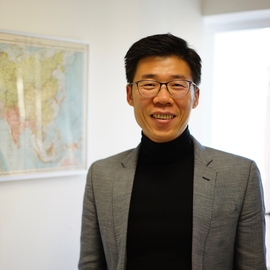
Dr Guibo Sun
Director
Dr Guibo Sun is a Lecturer in Urban Planning at the University of Manchester. His research examines how major urban infrastructure shapes cities and affects social and health outcomes, spanning the intersections of planning, land policy, transportation, urban design, and public health.

Dr Yao Du
Dr Yao Du investigates causal links between public transport changes and older adults’ travel behavior, social engagement, and well-being. Older people face mobility challenges, so transport modifications can impact accessibility, social connections, and well-being. She explores how interventions shape travel adaptation and how psycho-social and environmental factors mediate behavior change impacting well-being.